The US military is spending a lot of energy putting platforms in far-out places, from way up in space to way down under the sea. The problem is that there’s not a whole lot of energy sources that can power them in those environments.
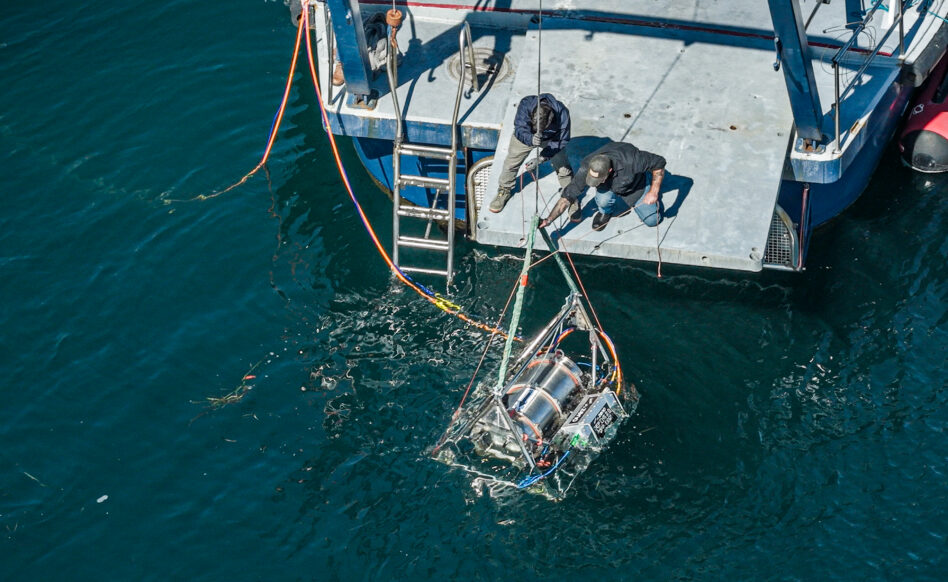
Seattle-based Zeno Power is betting that its “microwave-sized” nuclear batteries will do the trick, and it hit a key milestone in its path to deploying them next year after running an Electrically Heated Stirling Generator (ESG)—which converts heat into electricity—on the seabed for two weeks in a recent demonstration.
- The demo marks the first time an ESG has generated power on the seabed, according to the company, and Zeno’s produced over 20 watts of power.
Power up: Zeno’s nuclear batteries will ultimately use radioisotopes (specifically, Strontium-90) that decay and produce heat over decades. As they produce heat, the batteries convert that into electricity.
- The demonstration wasn’t using that nuclear power source, but it was the third and final box to check to integrate Strontium-90 into the battery for full deployment next year.
- “We’ve built a Strontium-90 heat source, we’ve now built the electrically heated system that converts that heat into electricity, and we’ve demonstrated the logistics and the operations of deploying and recovering this system from the seabed,” Zeno CEO Tyler Bernstein told Tectonic. “Next year, we’ll bring all of that together to integrate the nuclear heat source into the [ESG] and deploy that on the seabed again with our first customers.”
- The generator Zeno sent to the bottom of the sea is the same form factor as the nuclear-powered one they’ll deliver next year.
Into the deep: Why is this important? Put simply, the US military is pretty keen on a “small box that generates electricity for 10-plus years” in extremely challenging domains, Bernstein explained, and Zeno has secured $60M in contracts with the Pentagon and NASA to develop and deploy it.
“As we’re seeing great power competition rise in the world, we’re seeing huge investments in the deep sea, in the Arctic, and in space,” Bernstein said. “These are frontiers that will define the coming century, but these are energy-constrained environments where batteries die quickly, infrastructure doesn’t exist, and solar power doesn’t work.”
“Energy is one of the biggest constraints to operations and to subsea superiority, and the holy grail in that market has always been a distributed, persistent energy source that can sustain these platforms for years at a time, and that is what we’re now delivering,” he added.
- Those platforms can range from subsea sensors and unmanned underwater vehicles to whatever else the military is sending into the deep.
- Zeno already has orders on the books with government and commercial customers for their nuclear batteries, with deliveries expected to start next year.
“The time for this is now,” Bernstein said. “You’re seeing global competition rise, you’re seeing undersea superiority be an important topic as maritime becomes a more contested environment, and we’re working hard to do our part to ensure that the US and our allies win this domain.”